
Can a Brand Use Rejected Influencer Content?
The Answer Depends on the Agreement
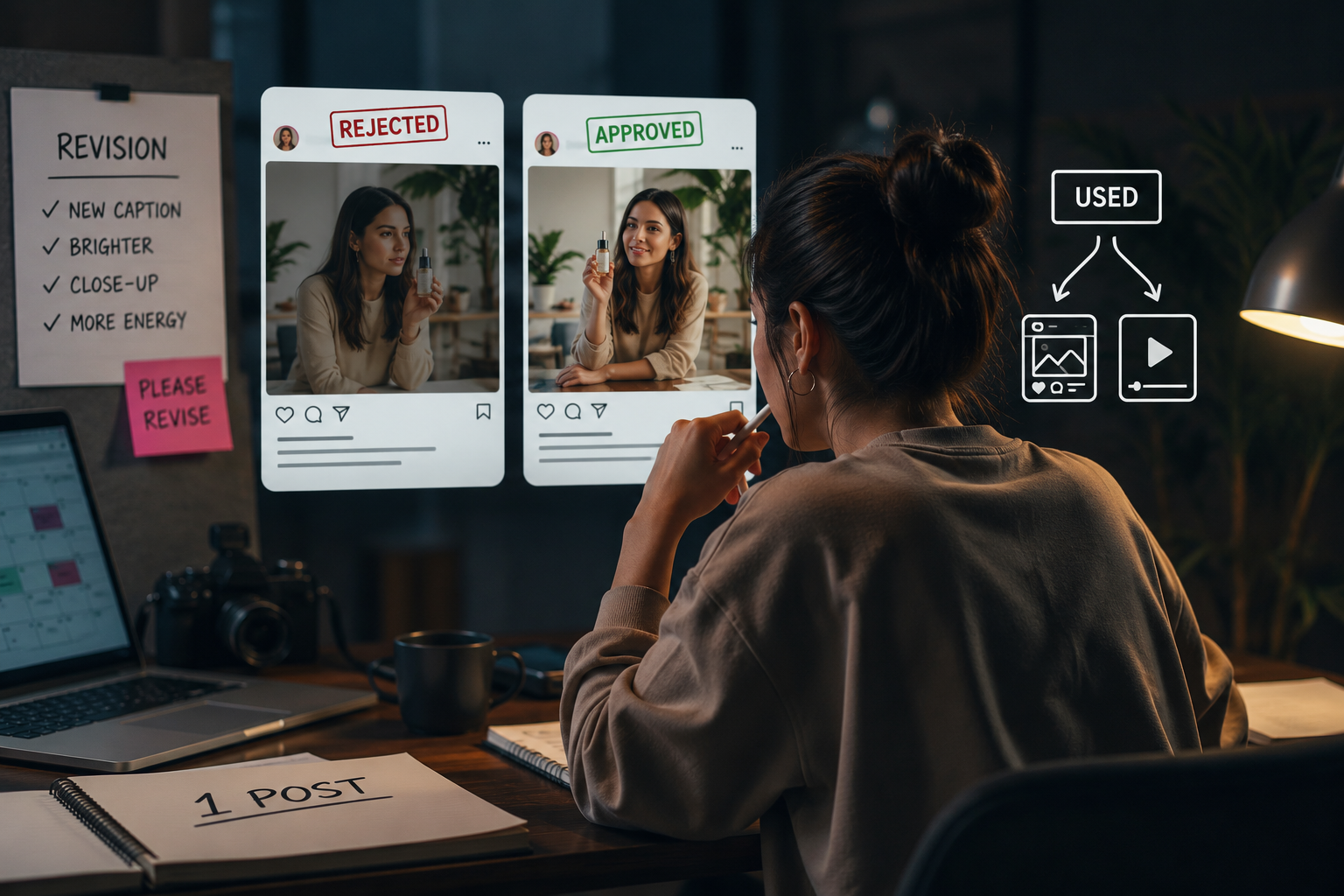
An influencer creates content for a brand campaign. The brand reviews the content and requests revisions. The influencer makes the requested changes and submits a new version.
The revised content is approved.
Then something unexpected happens.
The brand ends up using both the original content and the revised version—even though the influencer was only paid for one sponsored post.
This raises an important question for influencers, content creators, and brands:
Can a brand legally use content it previously rejected?
The Answer Depends on the Agreement
Many influencer collaborations begin with a focus on deliverables, deadlines, and compensation. While those terms are important, they are only part of the picture.
The answer to whether a brand can use rejected content often depends on what the agreement says about ownership, licensing, revisions, approvals, and content usage rights.
If the agreement gives the brand broad rights to all content created during the engagement, the brand may argue that it has the right to use both versions.
If the agreement limits the brand's rights to approved content only, the creator may have a stronger argument that the rejected version was never intended for use.
The key issue is not whether the content was rejected.
The key issue is what rights were granted.
Why Revisions Matter
Many creators view revisions as part of the creative process.
A brand asks for changes. The creator makes those changes. The final version is approved and published. Simple.
However, every revision creates an additional asset.
The original version has value.
The revised version has value.
The final version has value.
When a campaign generates multiple usable pieces of content, questions naturally arise about compensation and usage rights. From the creator's perspective, producing multiple versions often requires additional time, effort, creativity, and resources. From the brand's perspective, revisions may simply be viewed as part of the deliverable.
This disconnect can create disputes when expectations are not clearly addressed in advance.
Common Contract Issues Creators Should Review
Before signing an influencer agreement, creators should carefully review provisions addressing:
- Ownership of content
- Licensing rights
- Revisions and edits
- Approval processes
- Content usage rights
- Repurposing rights
- Whitelisting and advertising rights
- Duration of use
Many disputes occur not because either party acted in bad faith, but because the agreement never addressed the specific situation that later arose.
A Business Lesson for Influencers and Brands
As influencer marketing continues to mature, content is increasingly being treated as a business asset. That means creators should think beyond the payment amount and consider how their content may be used after it is delivered. Likewise, brands should ensure their agreements clearly define the scope of the rights they are acquiring. The more successful influencer marketing becomes, the more valuable those details become.
The Bottom Line
Can a brand use rejected influencer content? Maybe.
The answer depends on the rights granted in the agreement and the specific facts surrounding the collaboration. What creators and brands should take away from this issue is that rejected content is not necessarily worthless content. In many cases, it remains a valuable asset.
The best time to address ownership, usage rights, revisions, and approvals is before the content is created—not after a dispute arises over how it was used.