
Your Documentary Is Almost Finished. But Can You Distribute It?
The Success of Your Film Depends on Clearing the Rights
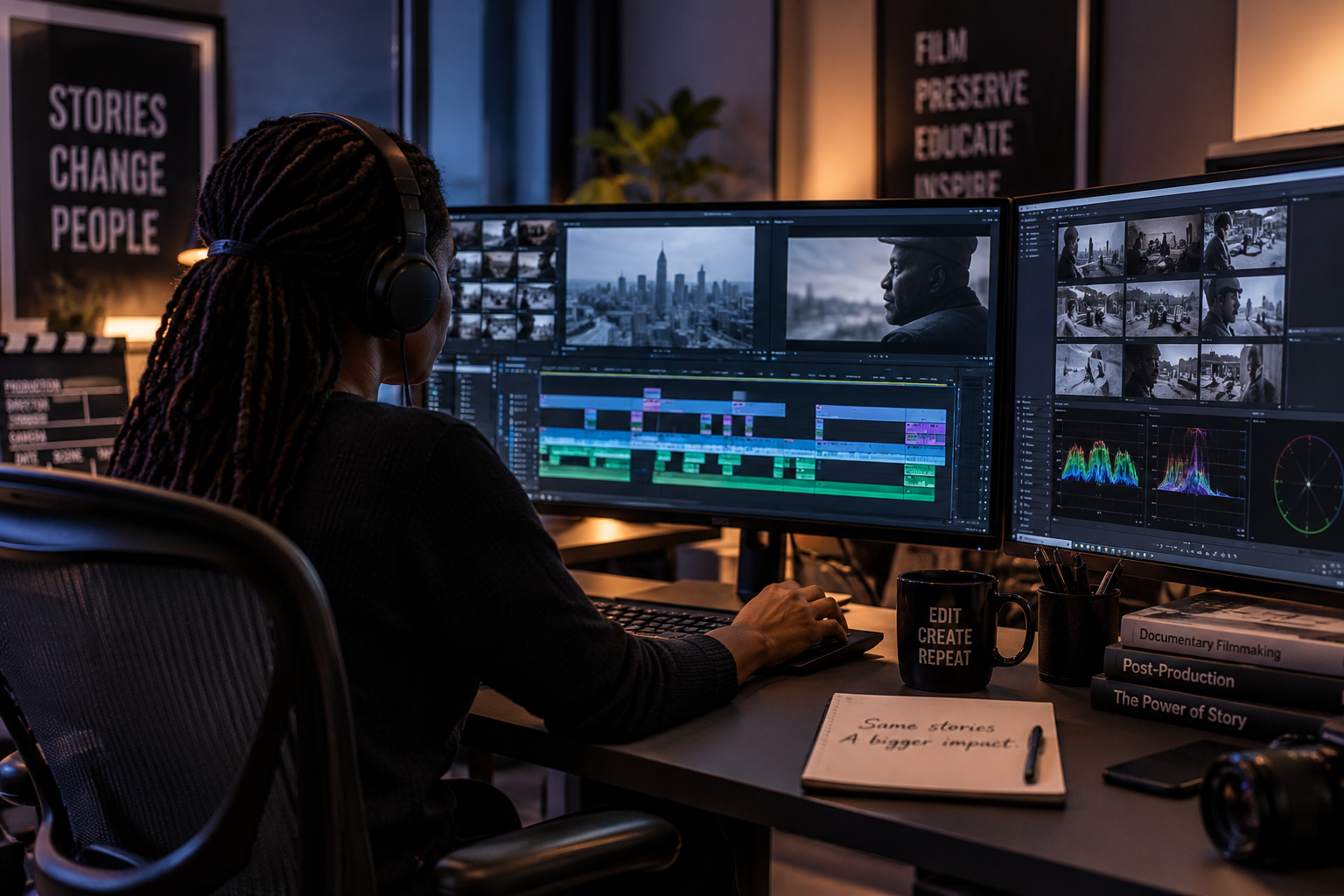
The interviews are complete. The edit is nearly locked. The producer is preparing for film festivals and distribution.
Then the clearance questions begin.
Where did this photograph come from?
Who recorded this archival footage?
Who owns the copyright in the newspaper article?
What authorizes the use of this music?
Did the documentary participant who supplied the materials actually have the authority to license them?
The production has an answer for only one of those questions:
"The subject gave it to us."
That is where momentum can slow.
Documentary filmmakers often rely on photographs, home videos, news reports, music, archival footage, and other existing materials to tell their stories. These materials can be essential to establishing historical context, supporting interviews, and bringing events to life.
But obtaining access to material does not necessarily establish the legal right to use it in a film.
Understanding that distinction before your documentary reaches the distribution stage can help you avoid unnecessary delays, unexpected expenses, and difficult editorial decisions.
1. Possession Is Not the Same as Copyright Ownership
Imagine a documentary subject gives a producer a collection of family photographs.
The subject appears in the photographs, has possessed them for decades, and is happy for the filmmaker to use them.
Does that mean the production has permission from the copyright owner?
Not necessarily.
Under U.S. copyright law, ownership of a physical object and ownership of the copyright embodied in that object are separate legal interests. Copyright generally begins with the author, subject to exceptions such as works made for hire and subsequent transfers.
The person who owns a photograph may not be the photographer or the copyright owner.
The same issue can arise with home videos, recordings, letters, and other materials supplied by documentary participants.
For example, a participant may possess footage recorded by a professional videographer. Their possession of the footage does not, by itself, establish that they can authorize its reproduction and distribution.
The practical takeaway: When someone supplies material, identify its source, determine who controls the relevant rights, and establish the legal basis for the production's intended use.
Do not assume that permission from the person providing the material resolves every copyright question.
2. Finding Material Online Does Not Make It Free to Use
A filmmaker discovers a newspaper article about an event featured in the documentary.
The article is available online. The filmmaker downloads it, places it in the edit, and assumes that because the information is publicly accessible, it can be freely reproduced.
That assumption can create problems.
Copyright does not generally protect facts themselves, but it can protect an author's original expression of those facts. A newspaper article may contain protectable written expression, and photographs accompanying the article may involve separate copyright interests.
This distinction matters when a filmmaker moves beyond reporting the facts and reproduces the actual article, headline, photograph, or other protected content.
The legal analysis may also depend on how the material is used.
For example, displaying an article to examine how the media covered a particular event raises different considerations from reproducing an article simply as background decoration.
The fact that material is available on a website does not, standing alone, establish that it is in the public domain or that its use is authorized.
The practical takeaway: Determine what material is actually being reproduced, why it is being used, and whether permission, fair use, public-domain status, or another legal basis supports its inclusion.
3. Not Every Documentary Use Requires a License
One of the most important distinctions in documentary filmmaking is the difference between a use that requires permission and a use that may qualify as fair use.
Fair use permits certain uses of copyrighted material without authorization from the copyright owner.
Under Section 107 of the Copyright Act, courts consider four statutory factors:
- The purpose and character of the use.
- The nature of the copyrighted work.
- The amount and substantiality of the portion used.
- The effect of the use on the potential market for or value of the copyrighted work.
The analysis is contextual, and no single factor automatically determines the outcome.
For documentary filmmakers, fair use can be particularly important when copyrighted materials are necessary for criticism, commentary, historical analysis, or other legitimate expressive purposes.
Consider a documentary examining how a major event was reported by the media.
The filmmaker may need to show portions of actual news coverage to illustrate differences in reporting, examine a particular narrative, or support a critical argument.
That use presents a different legal question from inserting the same footage merely because it provides an attractive visual.
However, there is no universal rule that a particular number of seconds, percentage of a work, or type of documentary automatically qualifies as fair use.
Nor does labeling a project educational or documentary make every use permissible.
The practical takeaway: Evaluate each proposed use in context. Where fair use is the intended legal basis, document the purpose of the use and obtain an appropriate legal assessment rather than relying on a blanket assumption.
4. Music Can Present Multiple Rights Questions
Music often plays a significant role in documentary storytelling.
A song may establish the period, reinforce an emotional moment, or provide historical context.
But music clearance can involve more than one copyright.
A commercially released recording generally involves rights in both the underlying musical composition and the particular sound recording.
Depending on the circumstances, incorporating that recording into a documentary may require authorization covering both sets of rights.
For example, obtaining permission from the songwriter does not necessarily authorize use of a recording owned by a record label.
Similarly, a documentary participant's willingness to share a song does not establish that the participant controls all relevant rights.
The intended scope of use also matters. A license may contain restrictions concerning media, territory, duration, promotional uses, or other distribution terms.
A production planning only a limited festival run may have different licensing needs from one pursuing worldwide streaming distribution.
The practical takeaway: Identify the relevant rights holders and evaluate the intended uses before committing music to the final edit. Where licensing is necessary, the production should understand what rights it is actually obtaining.
5. Your Distribution Plans Should Inform Your Clearance Strategy
A documentary may begin as a small independent production with the goal of entering a few film festivals.
As the project develops, the producer may pursue streaming distribution, broadcast opportunities, international sales, or educational licensing.
Those possibilities should inform clearance decisions.
A license limited to certain territories or uses may not cover every future distribution opportunity.
Similarly, an agreement permitting a particular use of archival footage may not automatically authorize its inclusion in trailers, advertisements, or other promotional materials.
The relevant contractual language matters.
A production should also be prepared to provide distributors, broadcasters, or insurers with documentation supporting its rights and uses.
Appropriately supported fair-use positions may be accepted in distribution and insurance contexts, although individual requirements vary.
A clearance strategy should therefore account for both the legal basis for using the material and the documentation necessary to support the production's intended exploitation.
The practical takeaway: Think beyond the first screening. Evaluate rights in light of the distribution opportunities the production intends to pursue.
6. Build a Clearance Record Before the Final Edit
Clearance should not be treated as a single task performed after the documentary is complete.
A practical approach is to track third-party materials as they enter the production.
For each item, the production should be able to answer several basic questions:
- What is the material, and where did it come from?
- Who created it, and who controls the relevant rights?
- What is the purpose of including it in the documentary?
- What legal basis supports its intended use?
- Are there any limitations on the use or distribution?
- What documentation supports the production's position?
A clearance log can help the production organize this information and identify unresolved questions while there is still time to address them.
That may involve locating a rights holder, obtaining a license, evaluating fair use, replacing material, or modifying an edit.
The appropriate response will depend on the material and its intended use.
The objective is not to obtain a license for every item regardless of whether one is legally required. It is to establish and document a defensible legal basis for the uses the production intends to make.
The Bottom Line: Don't Wait Until Distribution to Ask the Rights Questions
A compelling documentary deserves a clear path to its audience.
But the legal work supporting that path should begin long before a distributor requests clearance documentation.
When filmmakers identify third-party materials early, distinguish possession from copyright ownership, evaluate fair use appropriately, and document their rights decisions, they are better positioned to address issues before they disrupt the production's next steps.
The question is not simply whether someone gave you the material.
The question is whether your production has a legally supportable basis for using it in the way you intend.
Is Your Documentary Ready for Distribution?
Unresolved rights questions can create uncertainty at precisely the moment you are preparing to move your film forward.
New Jersey entertainment law firm, Mason Firm, works with filmmakers and production companies to evaluate legal and business issues affecting their projects, including copyright, licensing, agreements, and distribution.
Our Strategy Session provides an opportunity to examine your specific concerns, understand your options, and develop a tailored path forward.